

At home · For parents and carers
They'll ask to play. You'll know it's working.
- See if they played, and what they learned
- One thing to do together tonight
- Help getting ready for the 7+ or the Year 4 check
Reception, the 7+ and the Year 4 tables check · ages 4 to 9
Times tables and spelling, played as games. Every right answer builds something in their own village. A few minutes a day is enough.
At home · For parents and carers
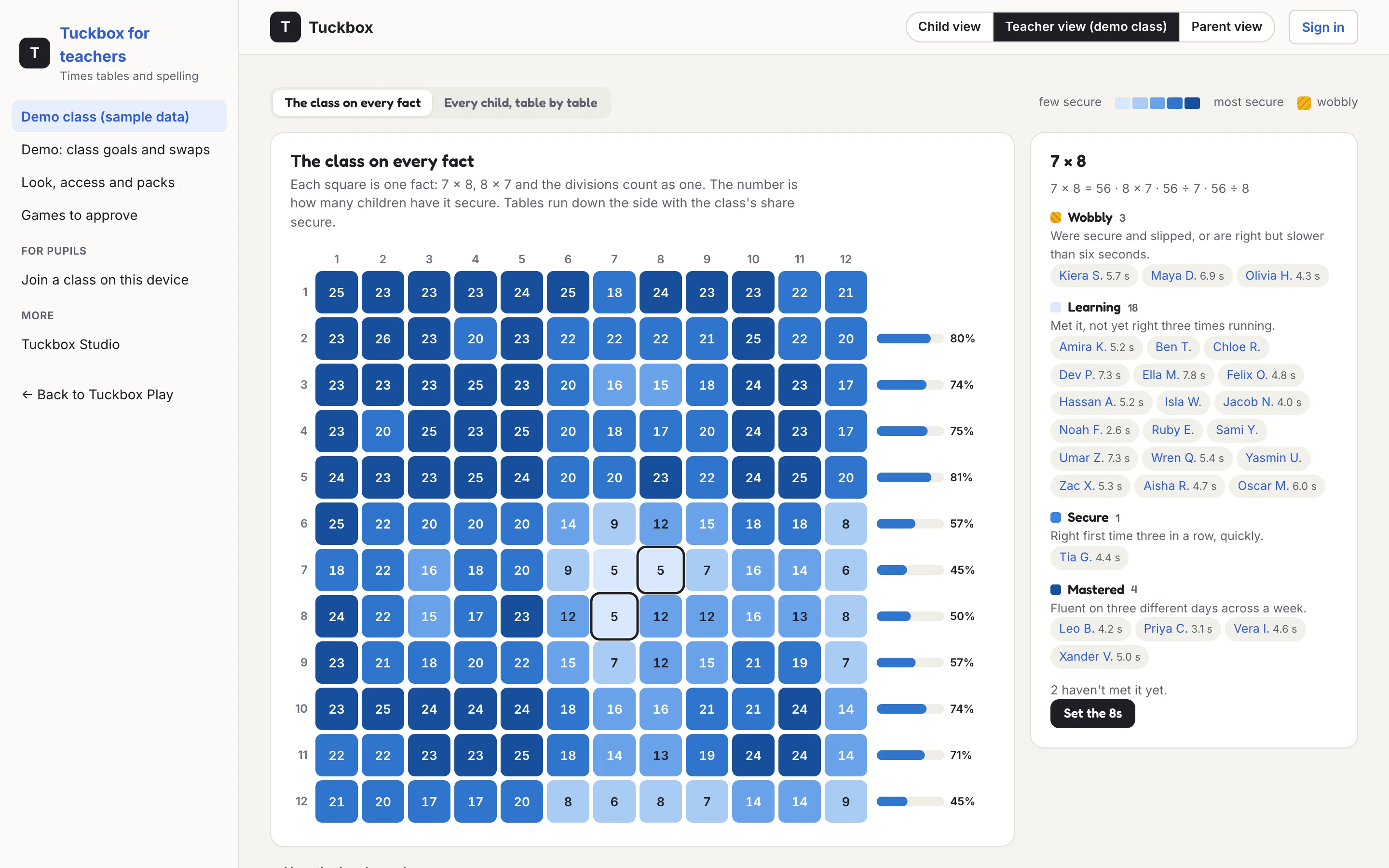
At school · For teachers and schools
Two minutes
What it is
Tuckbox Play is a set of games for children from Reception to Year 4. It works towards three things: Reception's early years learning, the 7+ and the Year 4 multiplication tables check. Times tables and spelling for Years 1 to 4 run underneath all three, and everything a child learns builds their own village. Families use it at home. Teachers use it with their class.
Short lessons in a schoolhouse in their village show the method first, like why the 9s are easy. Then the games practise it.
How the lessons workNumber, sounds, feelings and stories from the early years framework, in short sessions with a grown-up beside them. They play in their bedroom and Box Town, a town made of cardboard boxes.
ReceptionAll 154 skills Tuckbox marks, from number to picture puzzles and reading, as games. The 4 writing skills come with ideas and a checklist for a grown-up to mark.
Getting ready for the 7+Choose what it covers: everything for their year, one test, or your own mix. Their world changes to match. Nothing looks missing, and nothing they've earned is taken away.
Choosing what it coversA teacher can make a character of themselves to hand out the day's jobs. Work they set arrives as "Mrs Marsh's job".
For schools
 What if The Sims and Times Tables Rock Stars had a baby, and Dora the Explorer babysat?
 Animal Crossing for your 7 times table.
 A Tamagotchi that only eats spelling words.
 Duolingo's streak, Stardew Valley's cosiness, and every times-tables fact up to 12 × 12.
 Roblox's dressing-up box, minus the shop: 86 hats, outfits and things to carry, and not one costs money.
…and they'd all be a little bit right. It's one world a child builds, and every answer in it counts.
We're not connected to any of these games, and their names belong to their owners. We just like them a lot.
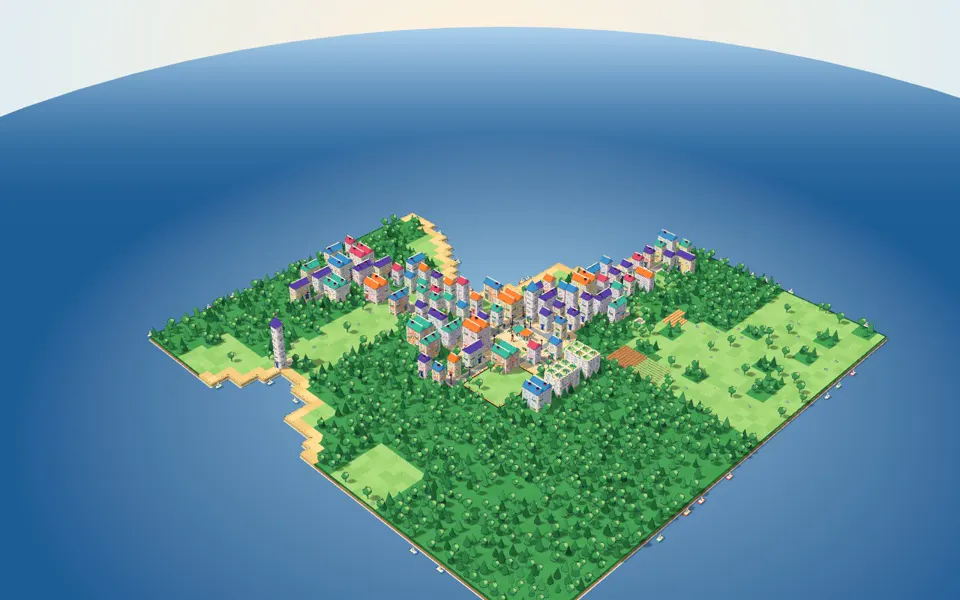
A made-up child, four weeks in
This is a child's village as they see it in the game. Every house in it is a fact they know. Drag to turn it.
The village is theirs from the first day, with the everyday games as its buildings: the hospital, the racetrack, the stadium and more. Every fact they learn puts up another house.
How the village growsTry it here
This is the real Tuckbox Play, with a made-up child's things already in it. Tap around, paint the town, move the furniture. Nothing you do here is saved.
Under 8
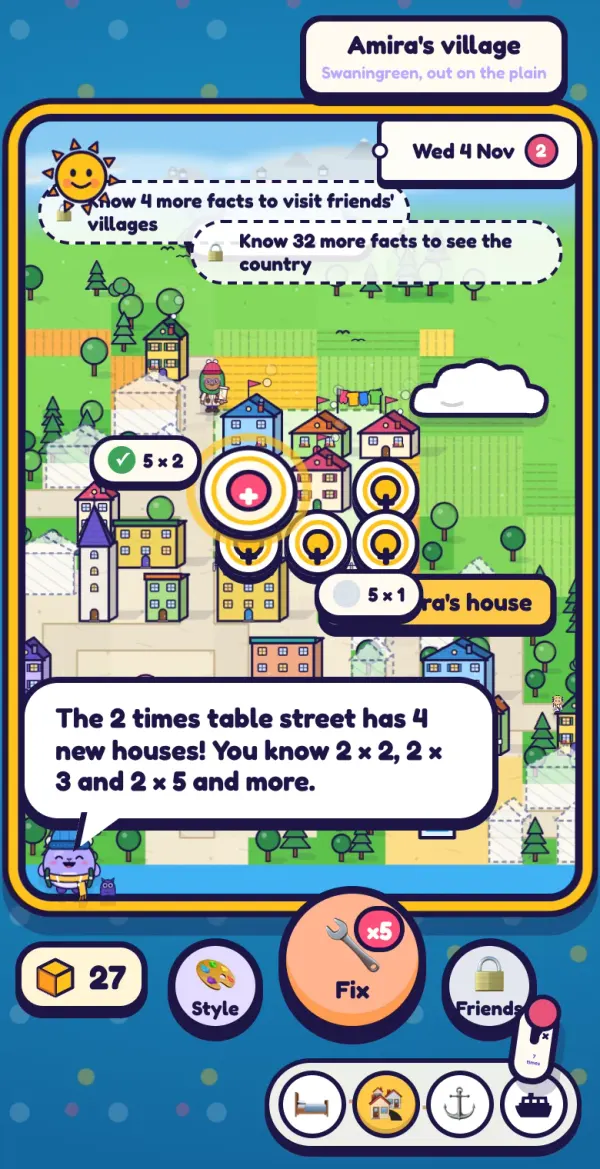
The paper village, a week in
8 and up
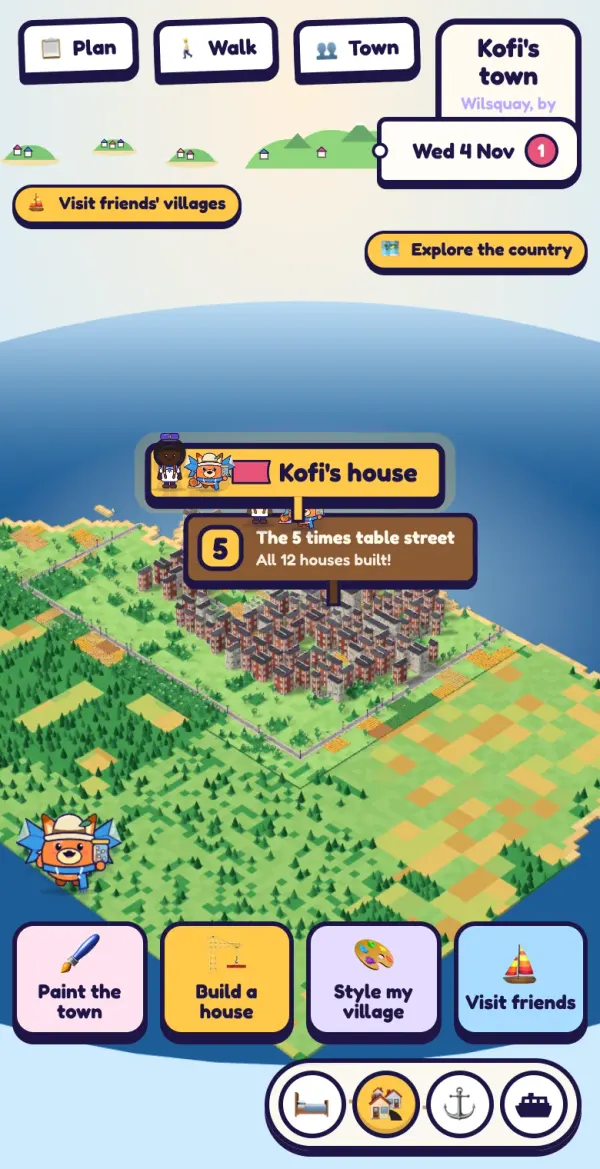
The town, everything learned
Why it matters
Times tables and spelling stick with short, frequent practice spread over weeks. At home that's a nightly battle, and at school it competes with everything else. Tuckbox Play turns that practice into games children ask to play.
Sources: Department for Education, multiplication tables check attainment 2024/25 and key stage 2 attainment 2025/26.
How it all fits together
Scroll through the loop a child goes round every day, what it grows into, and who's connected: the class, the school and the grown-ups at home. Tap anything on the map to read about it.
A loop of 7 steps: Answer, then Checked, then Knows it, then House built, then Card unlocks, then Job done, then Today board, then back to a question the next day.
Every turn in every game is a question. Each answer is checked against the same rules, and what a child has learned turns into things they can see. The next day starts from what's due.
Answer. In every game, a move is an answer: a tower powers up, a racer boosts, a note lands on the beat.
What a child builds, from the smallest to the largest: Me and Buddy, which takes nothing: free from the first day; Room, which takes nothing: theirs from the first day; Village, which takes nothing: theirs from the first day; Town, which takes 25 things known.
It starts with a character of themselves and a Buddy. As they learn, the world pulls back to show more: a room, a village, and then a town they plan.
Tap or hover a ring to see what it takes.
Each child's device joins a class with a class code and picture key. Classes belong to the school. Grown-ups link only to their own children. The teacher's heatmap and Class Live read from the class. Children sit side by side, never in order, and rewards only come from learning. Settings flow down from school to class to home to child, and a child's access needs always win.
A child joins their class with a code and a picture key. The class belongs to the school. A grown-up at home is linked to their own children and nobody else's.
Tap or hover anyone on the map.
Why it works
Children forget. What they practise a few times, spread over weeks, stays. Tuckbox times each review for each fact and each child.
How likely a child is to remember a fact over four weeks. Press Practise to add a review at the time Tuckbox brings it back.
Learned once and never practised, the fact has faded to 1% by day 28.
Three right first time in a row, at least two inside six seconds. 7 × 8, 8 × 7 and 56 ÷ 7 are one fact, so they all count. Try it.
Answer three times. Each try is a first try at a new question about the same fact.
Every move in every game is an answer from memory. Recalling a fact strengthens it more than reading it again.
A fact they know comes back after three days, then a week, then two weeks. Facts starting to slip come first. One left for three weeks goes back to Nearly there, but its house stays standing.
The Year 4 check gives six seconds a question. Knows it means right first time, three times in a row, two of them inside six seconds. Knows it by heart means still right on three different days.
Each fact they know builds a house in the child's village. With no coins and no leaderboards, every child sees their own village grow.
What a child makes

Skin, hair, face, clothes, glasses, hearing aids, a wheelchair. Who a child is costs nothing and is never locked.
A creature who goes everywhere with them. Hats, outfits and things to hold arrive as they learn. Try one: shuffle it.
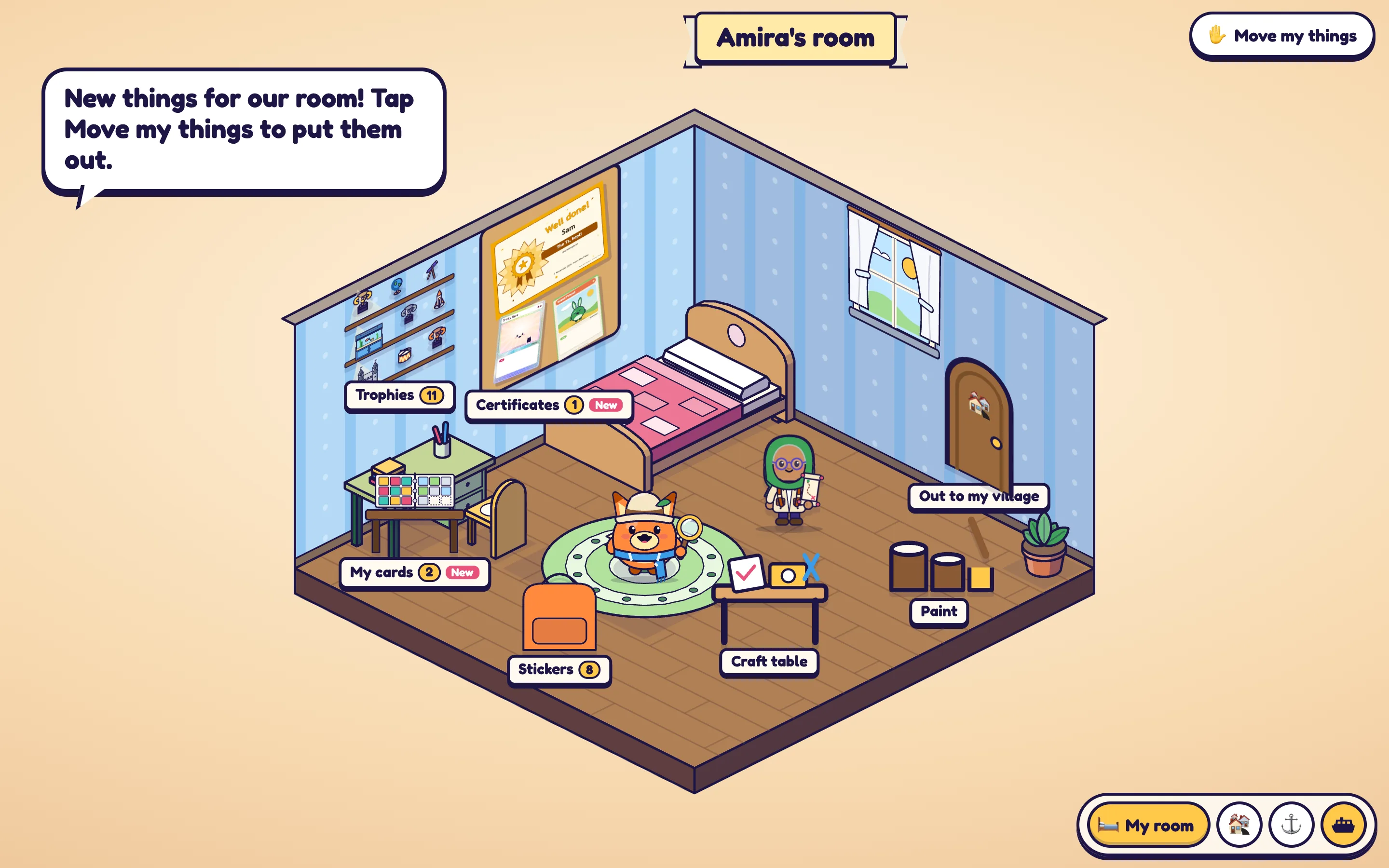
Cards in the binder, certificates on the pinboard, trophies on the shelf, and furniture to arrange.
Each times-tables fact they know is a house. Spelling builds the Word Quarter. It is theirs from the first day, with the everyday games as its buildings.
As they know more, the village grows into a town. Older children choose where the homes, the market and the park go, and new games open as buildings.
Making themselves is free. Everything after that comes from the games: a right answer powers a tower, wins a race or keeps the beat, and every one of those answers counts towards the rest.
Buddies
Every child makes a character of themselves, with more than 270 billion billion ways to do it, then picks a Buddy: a creature, from more than 11 billion billion possible ones. Children choose from eight skin tones and eighteen hairstyles and head coverings, among them a hijab, a patka, a turban and a durag. Hearing aids, cochlear implants, wheelchairs, prosthetic limbs and a white cane are all in the wardrobe. Everything about who a child is comes free from day one.
For teachers and parents
Times tables and spelling for Years 1 to 4 run underneath all three. Choose a goal and its date, and you'll see what's left each week. We never say "will pass".
Number, sounds, feelings and stories, played with a grown-up. Sounds follow what the class has been taught. Carpet time on the whiteboard for Reception classes.
Every skill the papers test: number, measures, picture puzzles, English and reading. Writing is marked by a grown-up.
Every times table up to 12 × 12, practised until they know each one: right first time, three times in a row, at least two within six seconds. The 66 facts the check asks are tracked for every child.
How it compares
Both subjects the statutory tests cover, in one product, with rewards that grow from what a child has learned. Every mark links to where we checked it.
The full comparison| What | Tuckbox Play | Times Tables Rock Stars | Mathletics |
|---|---|---|---|
| Times tables | Yes | Yes | Yes |
| Spelling | Yes | No | No |
| No ranking of childrenNo leaderboards that put one child above another | Yes | No | No |
| Certificates | Yes | Partly | Yes |
| Teacher sets work | Yes | Partly | Yes |
| Live games with other childrenIn Tuckbox Play the whole class plays one round together | Yes | Yes | Yes |
✓ yes✕ no◐ partly? not confirmed on the product's own pagesChecked 4 November 2026. Tap any mark for its source.


