How it works
How it works
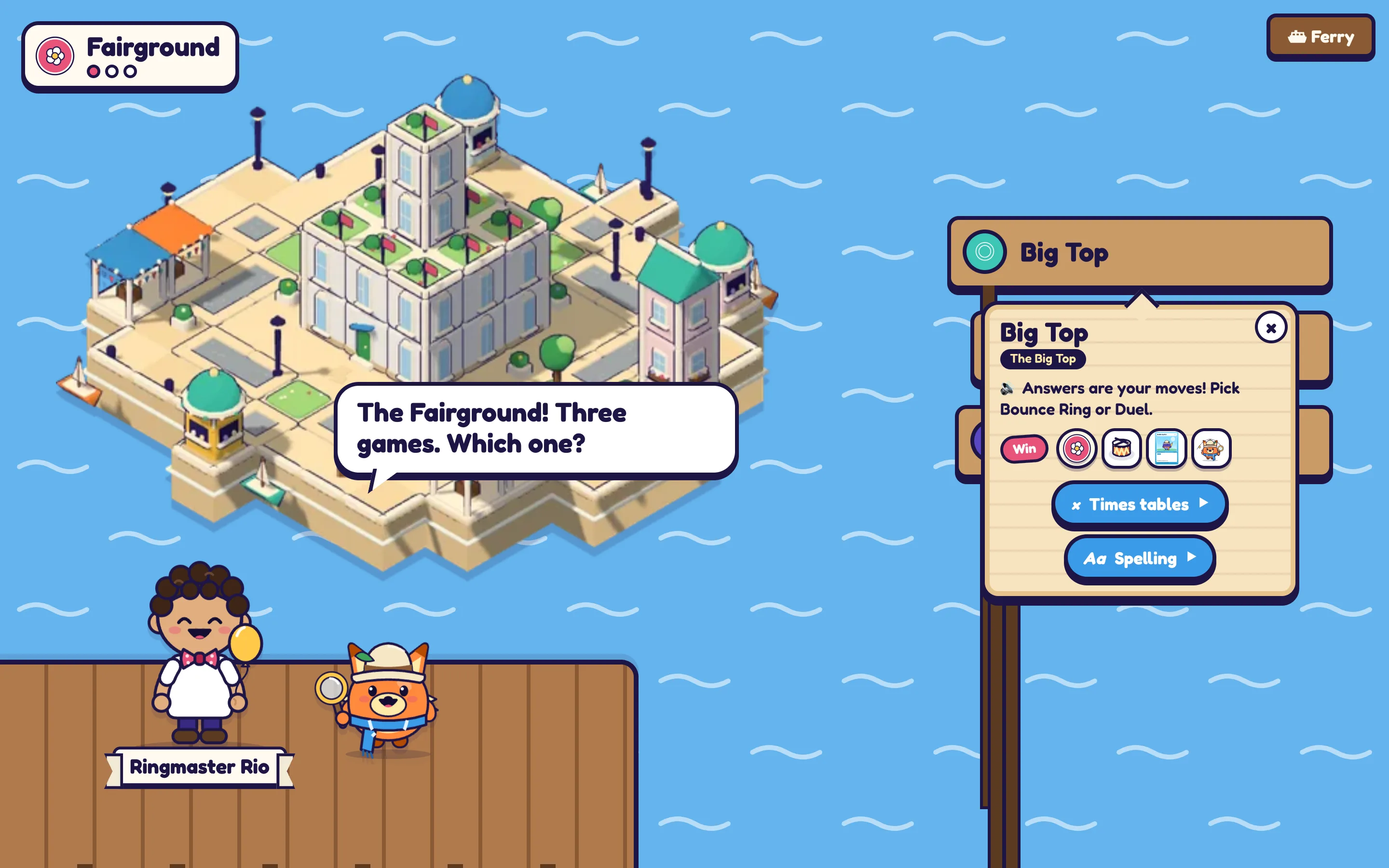
A child's world is two places: their room, and their town, where the games are. The Back button always leads home.
- My roomHome. The binder, the pinboard, the trophy shelf, the craft table and the paints.
- My townGrown from what the child has learned. Every game is a building in it: the hospital, the racetrack, the Castle, the Woods and more.
Years 1 and 2 have the same two places in a paper world, with pictures and speech in place of most words. Reception has a bedroom and Box Town, a town made of cardboard boxes.
Under 8
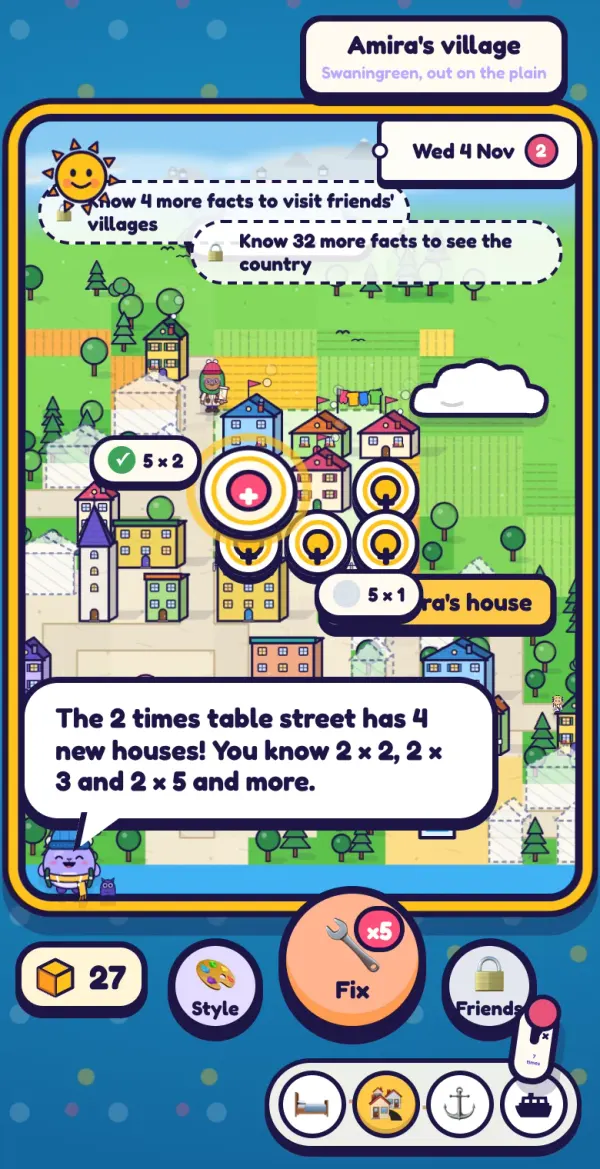
The paper village, a week in
8 and up
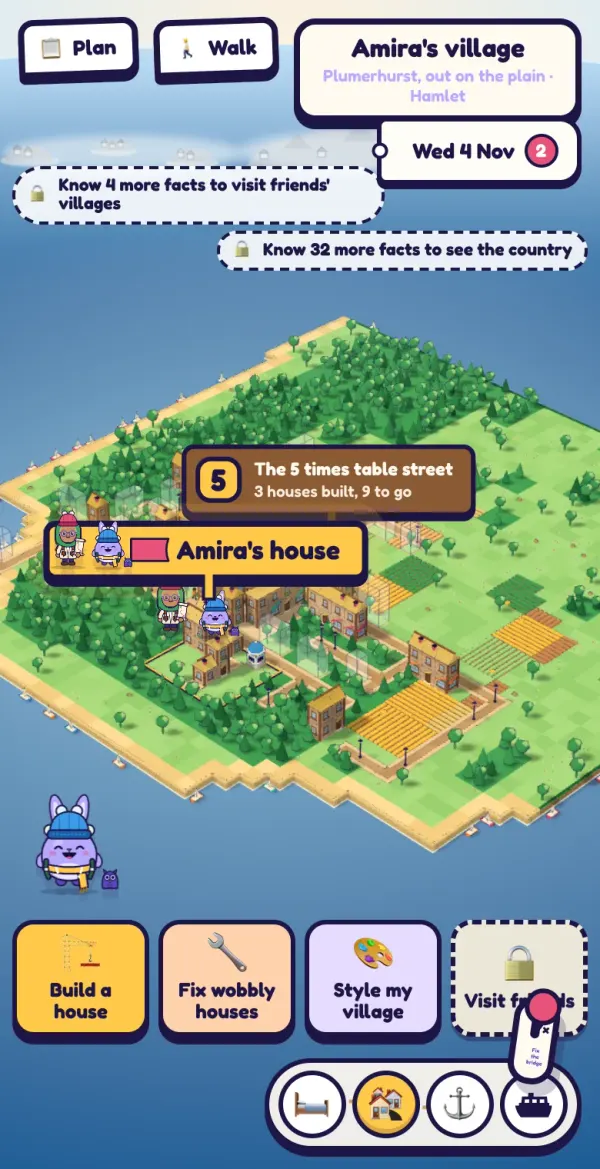
The village, a week in
These are the real game, with a made-up child's things in it. Nothing you do here is saved.
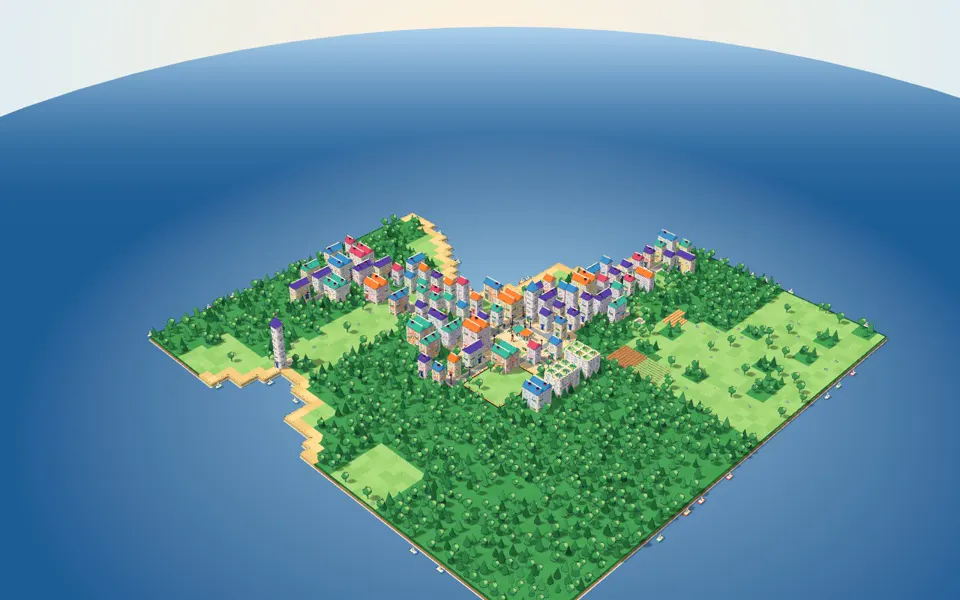
A made-up child, four weeks in
A village, grown from four weeks of learning
Each house is a fact this child has learned. Drag to turn it.
The village
The village is built from what a child knows
Every child gets a village of their own, with a river, fields and a square. Only their learning makes it grow.
A street for each times table
Facts they're practising stand as ghost houses. A fact they know is a built house. One they know by heart grows a storey taller.
The Word Quarter for spelling
Words a child knows grow the quarter round the library.
Landmarks as the totals climb
A town hall, a school, a park, a market and a clock tower arrive as they know more.
Their own house and plot
The child's house stands on a plot by the square. Each sticker they win brings six blocks to build with.
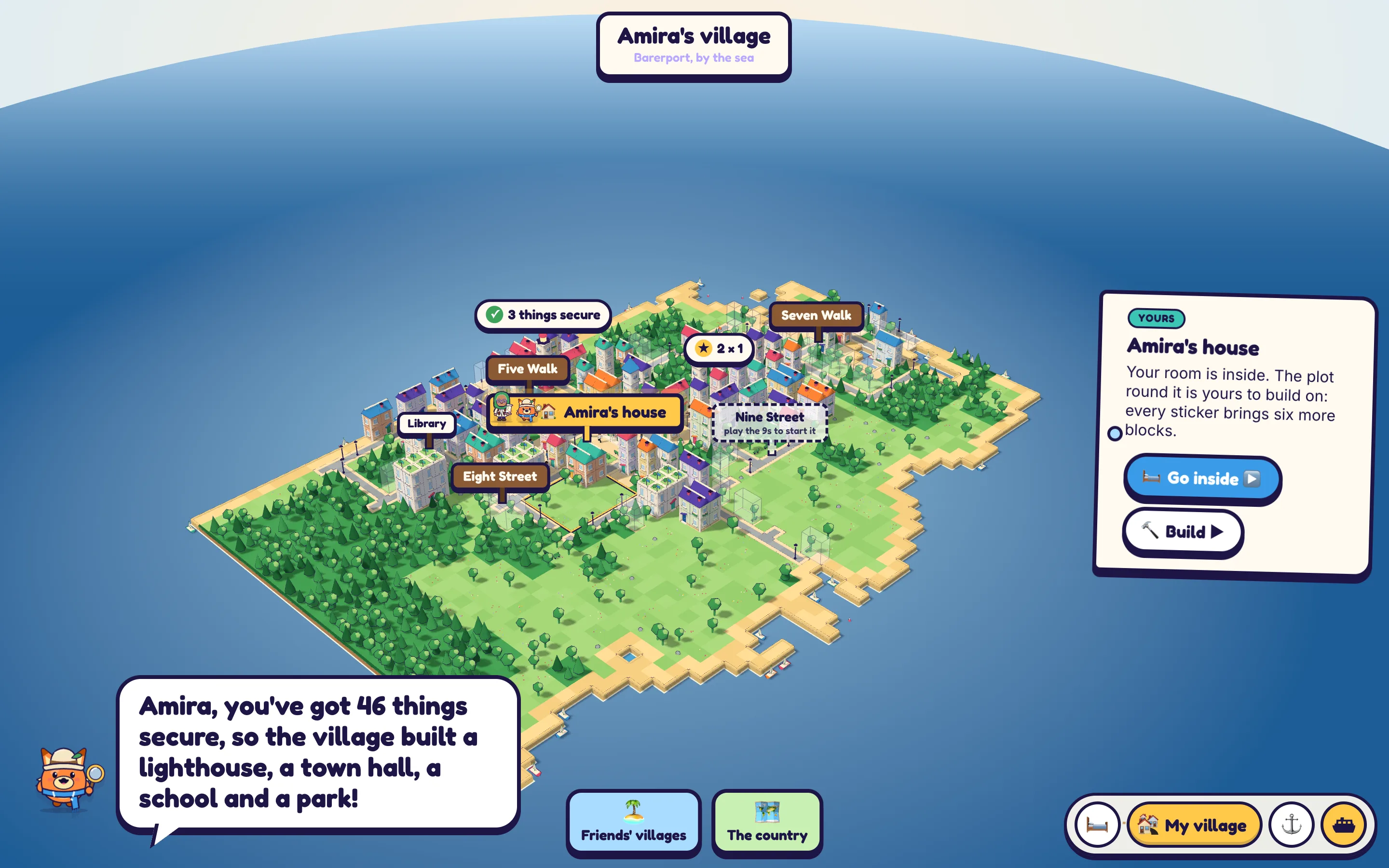
From village to town
As they know more facts, the village becomes a town. Older children choose where the homes, the market and the park go, and the town moves on through new ages: cottages first, then brick houses and paved streets.
Under 8
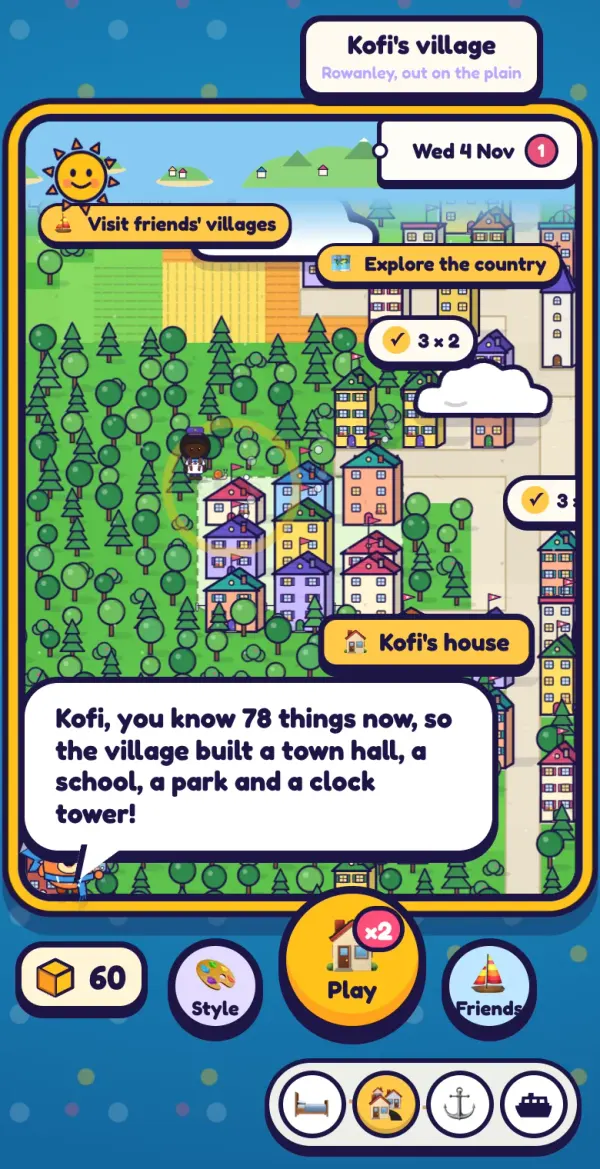
The paper town, everything learned
8 and up
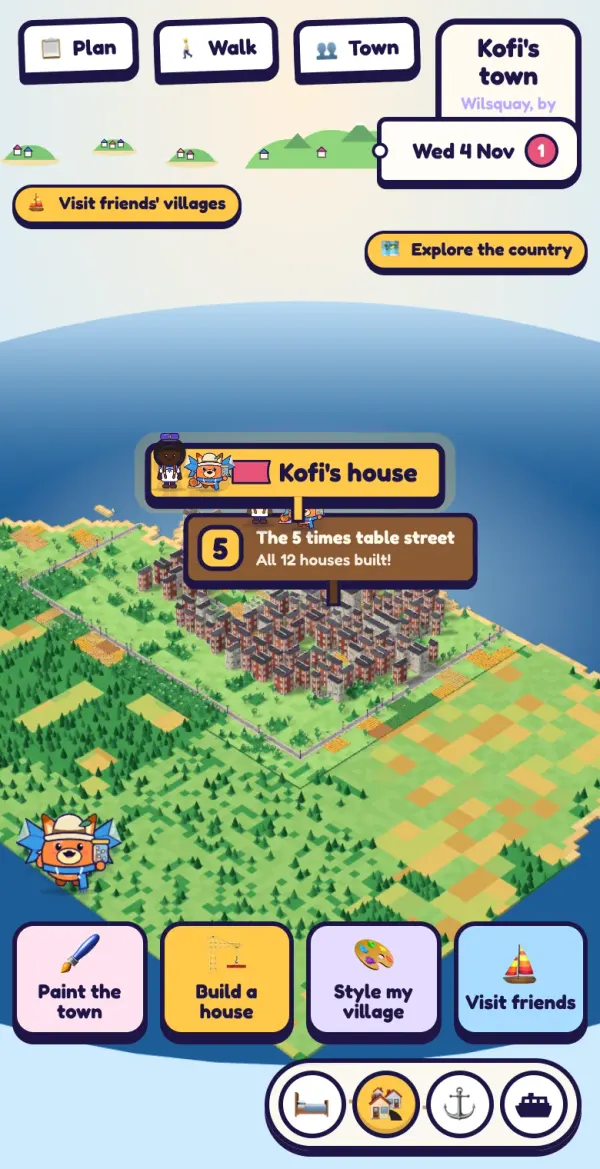
The town, everything learned
When a fact counts
When a child knows a fact, and when they know it by heart
We only count first tries. 7 × 8, 8 × 7 and 56 ÷ 7 are one fact, so a child can't win the same house three ways.
| Quick | A right answer on the first try, in 6 seconds or less. |
|---|---|
| Knows it | Three first-try right answers in a row, at least two of them quick. |
| Knows it by heart | Quick on three different days, spread across at least a week. |
| Nearly there | A fact they knew, with no quick answer for 21 days. Facts known by heart slip later, at 60 and 120 days. |
Each spelling word comes back for practice until a child spells it right on three different days.
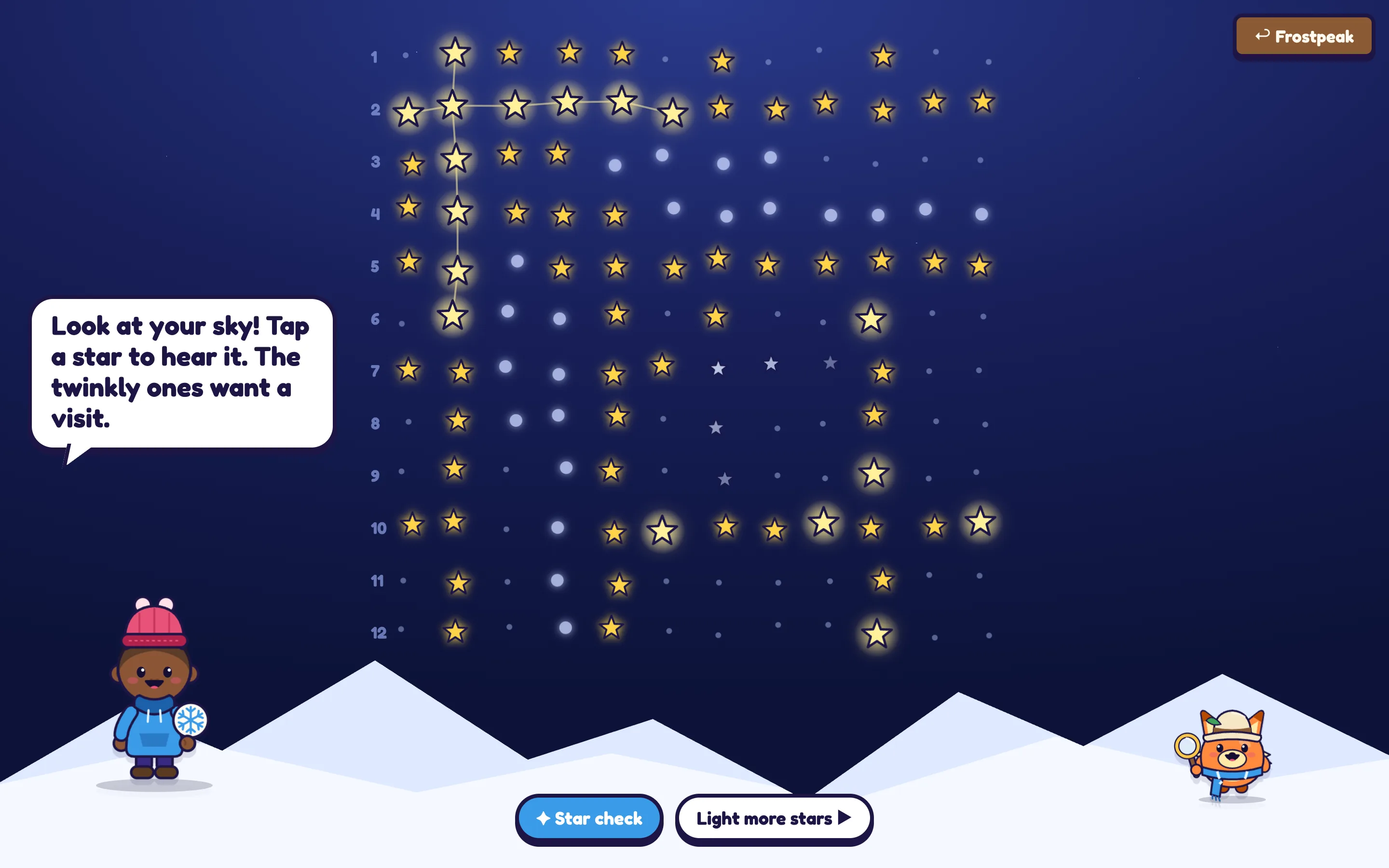
What opens as they learn
What a child owns grows as they learn
The everyday games are open from the start. What a child owns grows outward, one rung at a time, as they learn more.
- My roomFrom day one
- My villageFrom day one, with the everyday games as its buildings
- My townAt 25 things known, a town they plan street by street
- More gamesOpen as new buildings in the town as they learn
What a child keeps
Their room, their wardrobe and their trophies
Everything won in the games comes home. A child arranges their room however they like, dresses themselves and their Buddy, and keeps every trophy with the story of how they won it.
Under 8
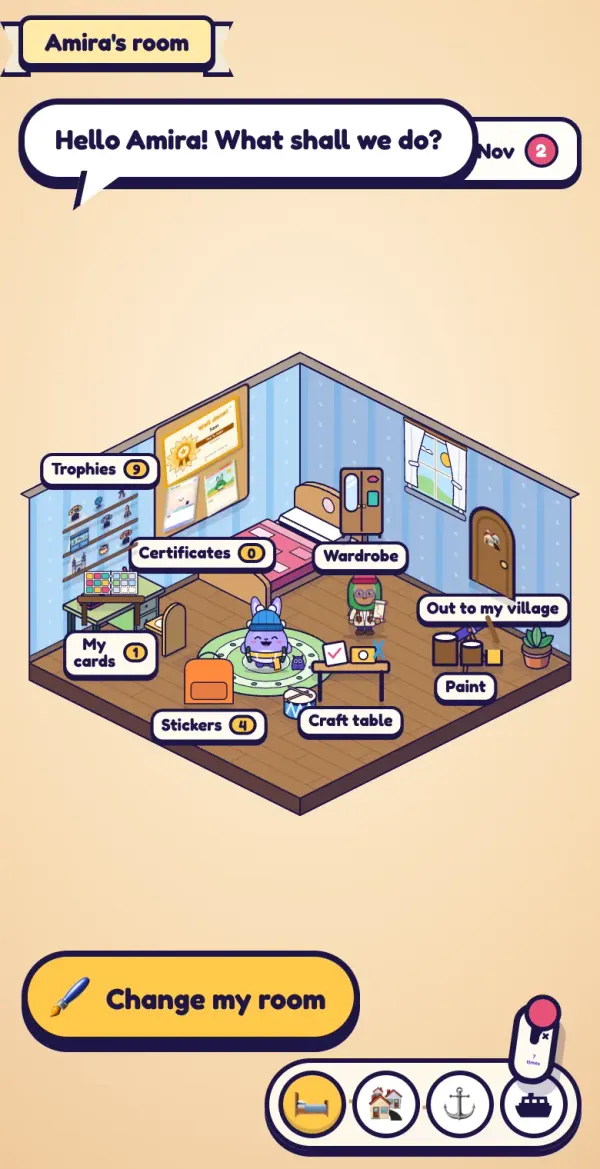
The little house, a week in
8 and up
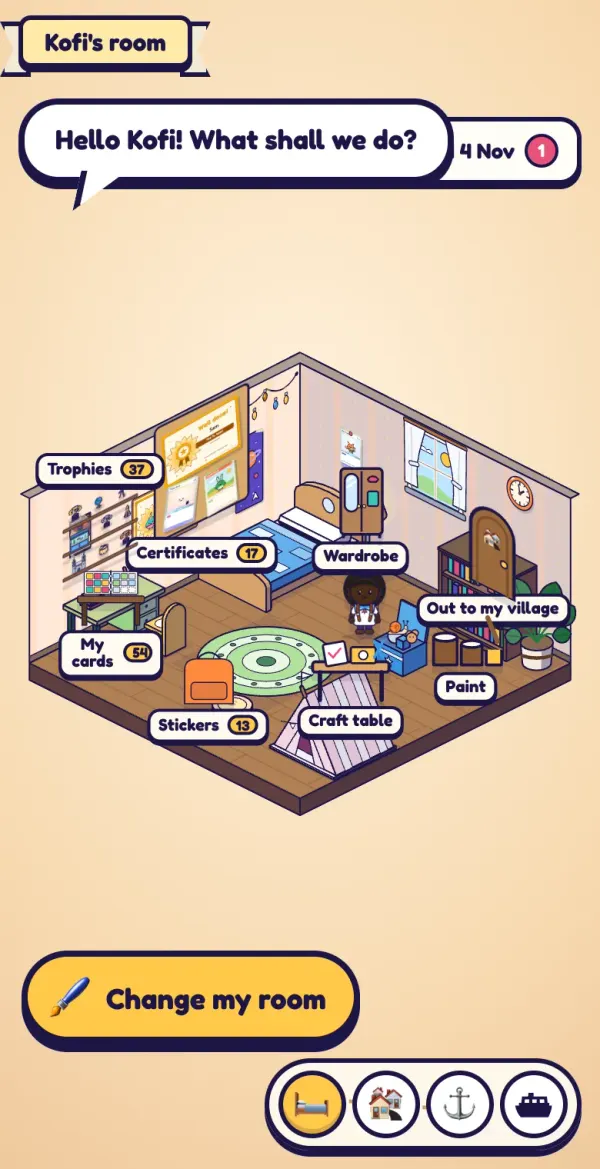
A room with everything won
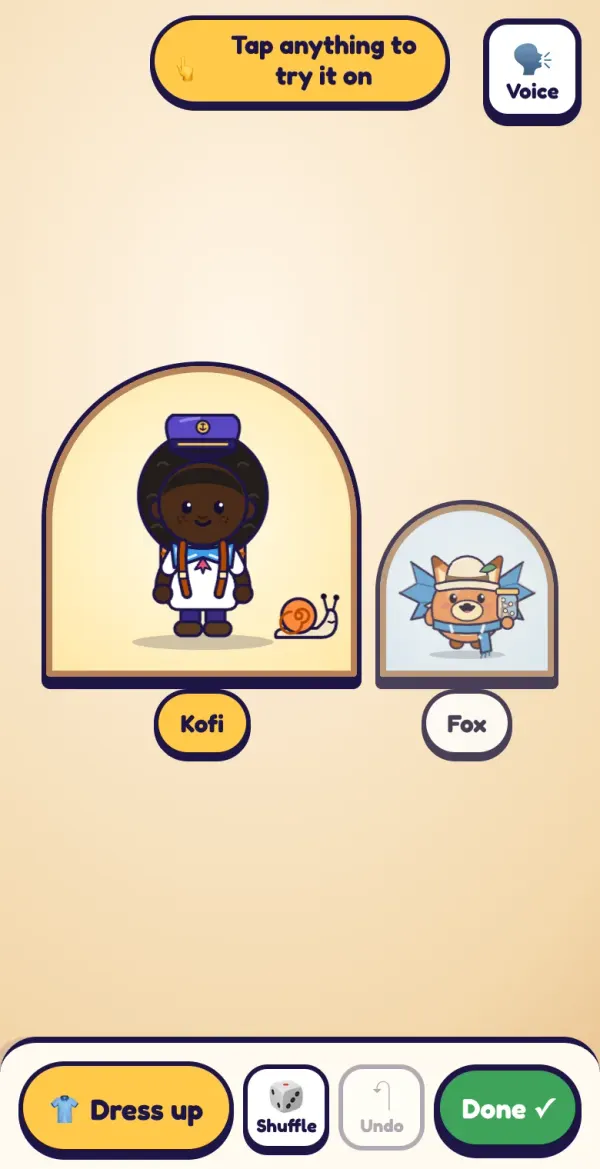
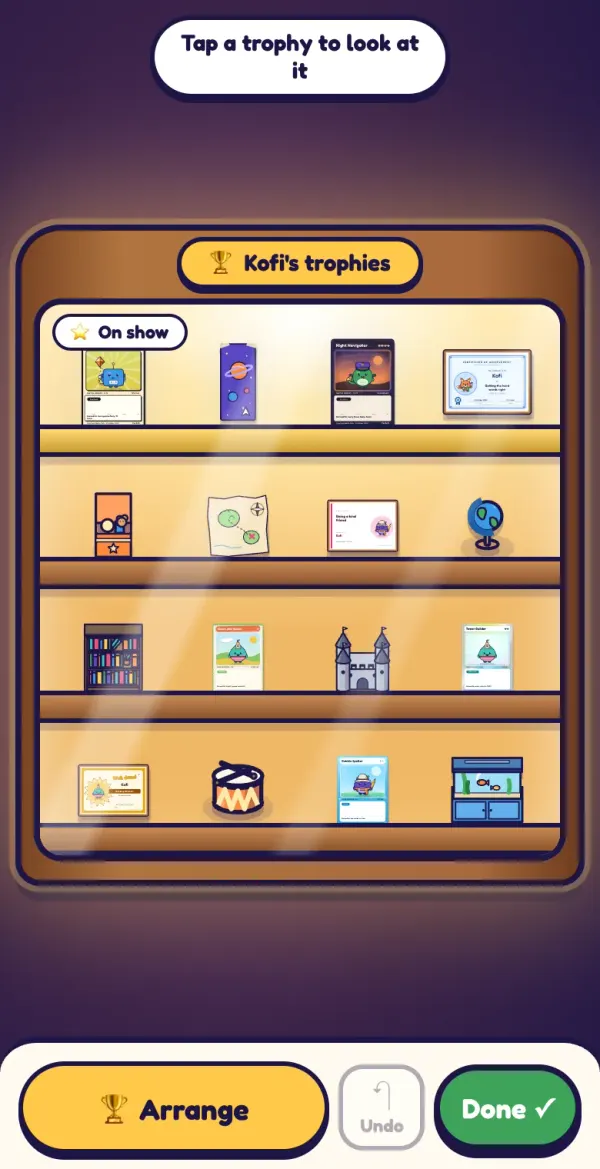
The wardrobe and the trophy cabinet are the same at every age.
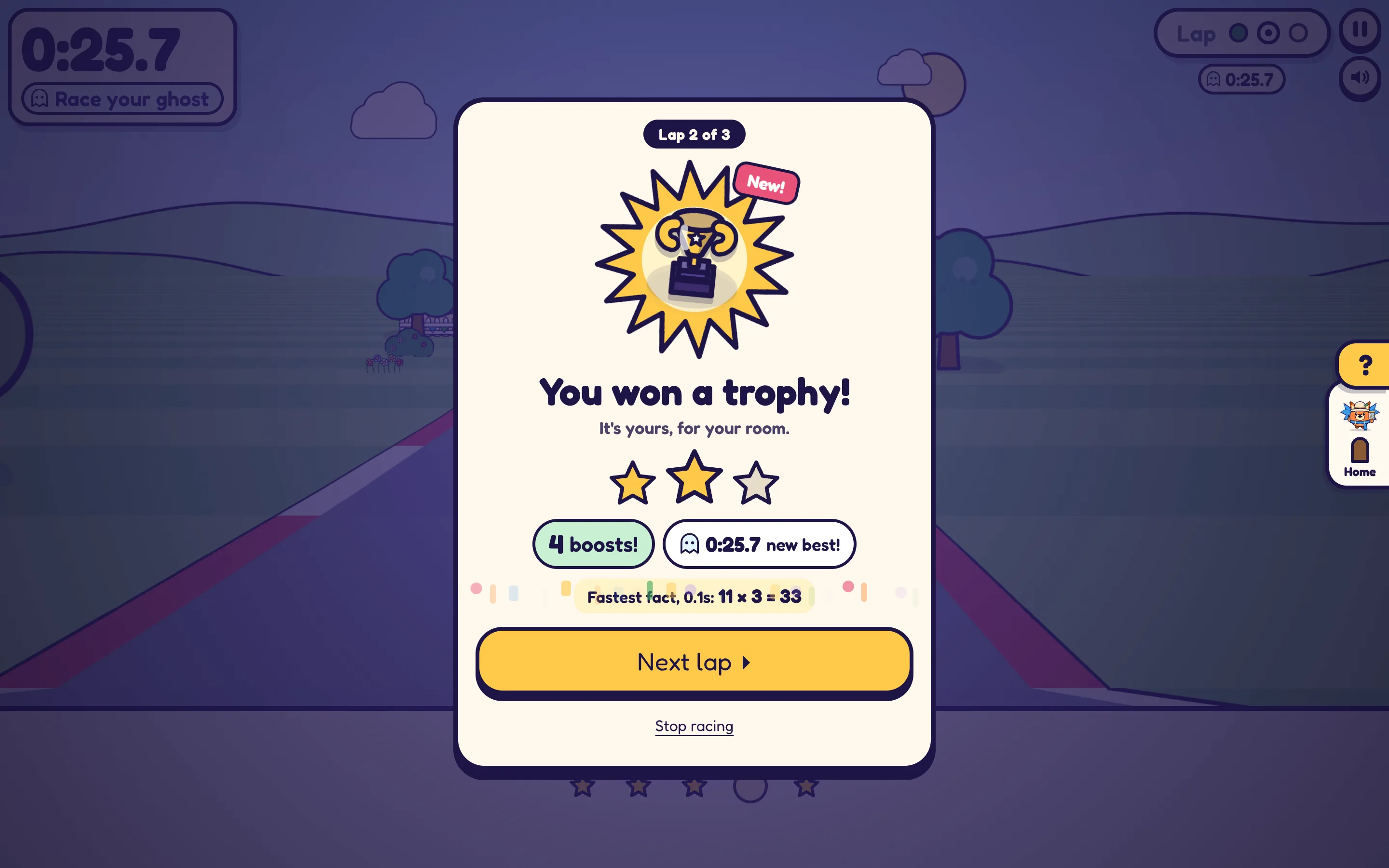
Every round ends with a win
The prize comes first, big: a trophy, a drum, a lamp. Then what the child did: stars, boosts, a new best and their fastest fact. One tap puts the prize in their room.
The Schoolhouse
Taught first, then practised
In the middle of the village is a schoolhouse. Its lessons take two to four minutes: a hook, a hands-on "see it", a few tries, a trick card to keep, then straight into a game playing that very thing. "Why the 9s are easy", number bonds, telling the time, odd one out.
Under-8s get a paper schoolhouse with a bell; from 8, a Blockwork classroom they walk into. A lesson is offered when something new opens, or after the same slip twice, and a teacher can set one. Play never waits for a lesson.
The SchoolhouseLearning before making time
Learning before making time
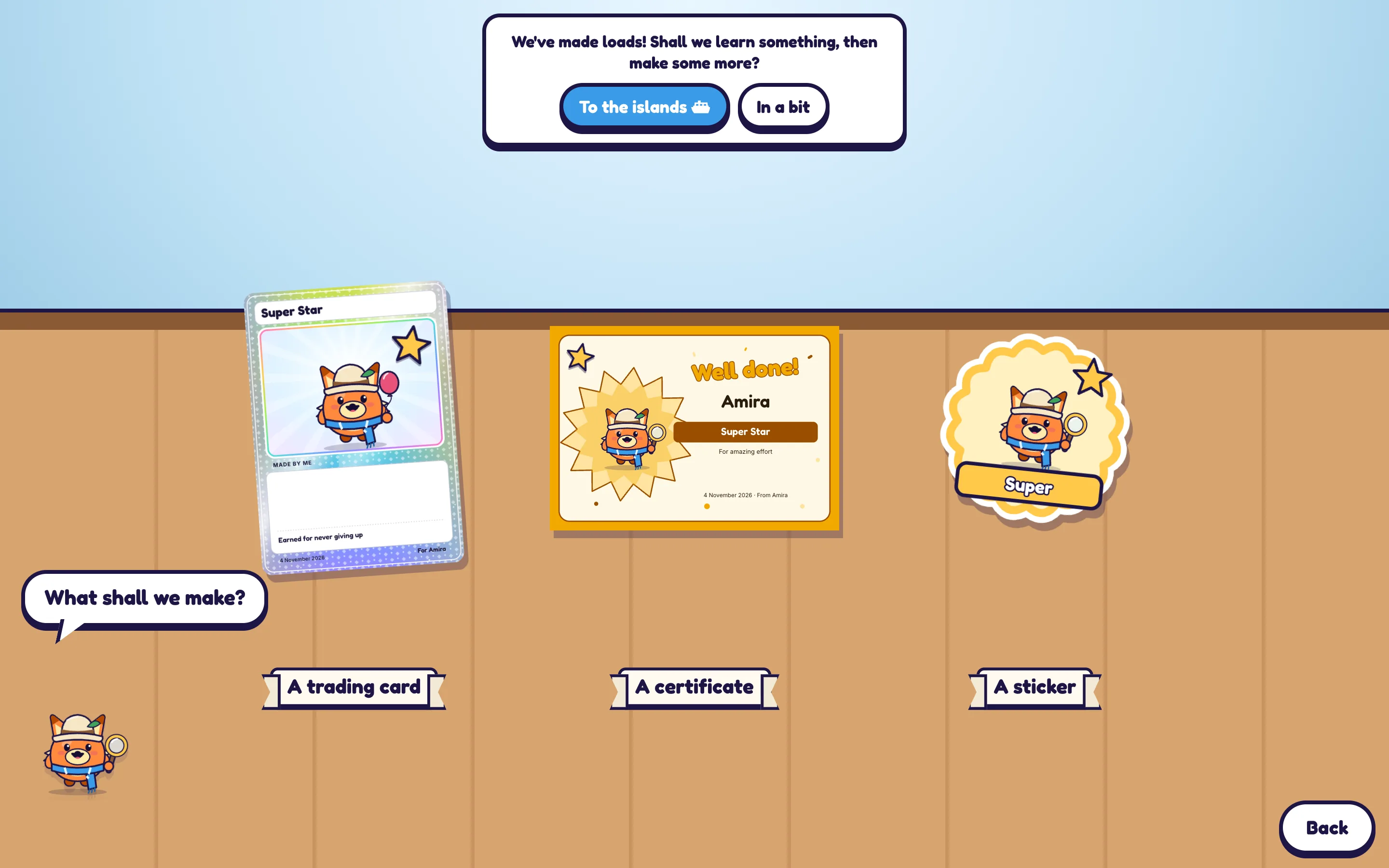
Building on the plot, moving furniture, the craft table, painting and visiting friends are making time: the rewards for learning. A school or a family decides how firmly they wait for it.
Buddy nudges
Making stays open. When learning is due, the Buddy suggests it, at most every ten minutes, and "In a bit" is always an answer. Every child starts on this setting.
After the warm-up
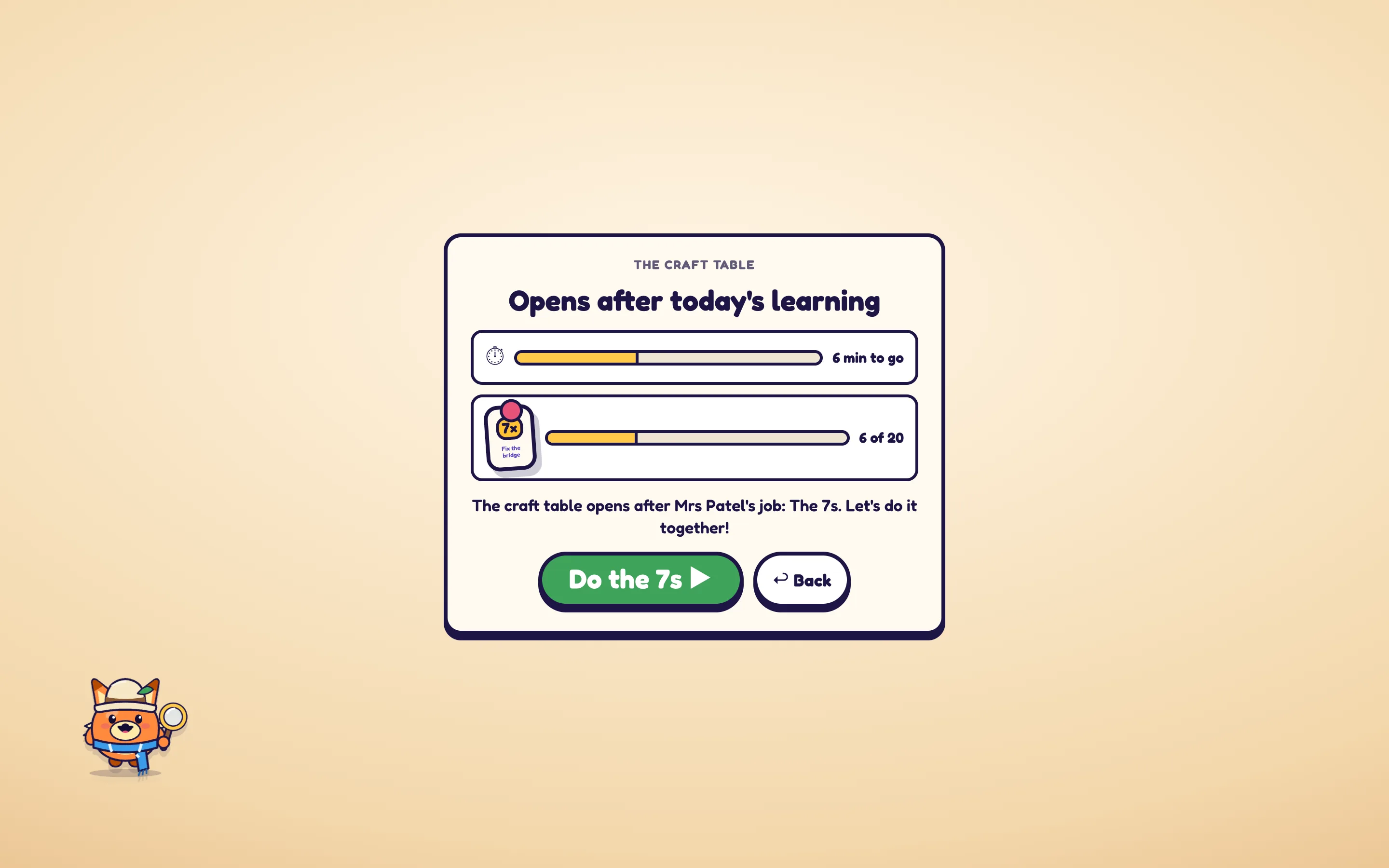
Making opens after ten minutes of learning and the teacher's job for the day. A two-minute peek is allowed once a day.
Earned by learning
Every minute of learning earns a minute of making, or half or two, as the grown-up chooses.
Only time with answers flowing counts as learning. Wandering a game world counts as play.
Each day
The day's job, and a board that says what's next
Mrs Patel has a job waiting: the 7s, say, or a spelling pattern. Twenty answers on it and it's done (twelve for under-8s). Stickers come from playing: three right answers in a place win its sticker, then another every ten.
A small board in the corner, the Today board, has the date and up to three things to do: Mrs Patel's job, a warm-up when the settings ask for one, and a review of facts starting to slip. Tap a line to go there.